The reason for buying AI rarely fixes the problem on its own.
Most people arrive at this decision the same way. The manual work has become impossible to ignore, and the question is no longer whether to do something but what. The natural first move is to go shopping for a tool, and that single instinct is responsible for a surprising share of automation projects that cost real money and change almost nothing. The mistake is rarely in which tool you choose. It is in believing that the tool is the decision.
Three ways companies try to solve this
The first approach is to buy a tool and turn it loose. Most companies already have one, handed out after someone decided everyone should be using a copilot or an automation platform. Sometimes it shaves a few minutes off an individual’s day. What it rarely does is change how work moves through the company, because a tool dropped onto a messy process only automates the mess a little faster.
The second approach is to build something custom around how things work today. This feels rigorous, and occasionally it is, but more often it means asking an internal team to construct automation on top of a process nobody has examined closely. One company spent six months on a custom building that still did not work when they stopped. It can produce something solid; it can also produce something brittle that breaks the first time the process shifts, which processes always do.
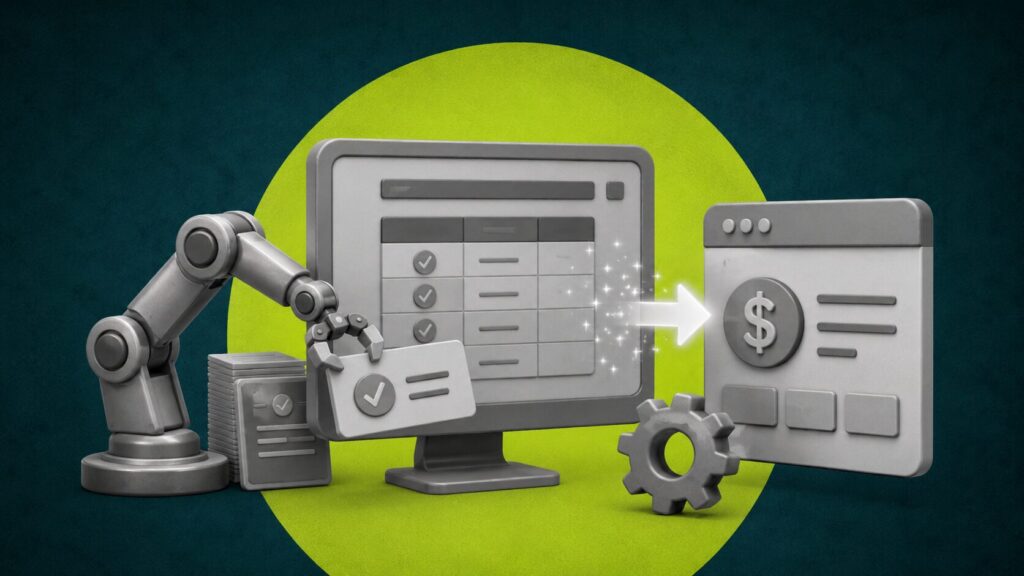
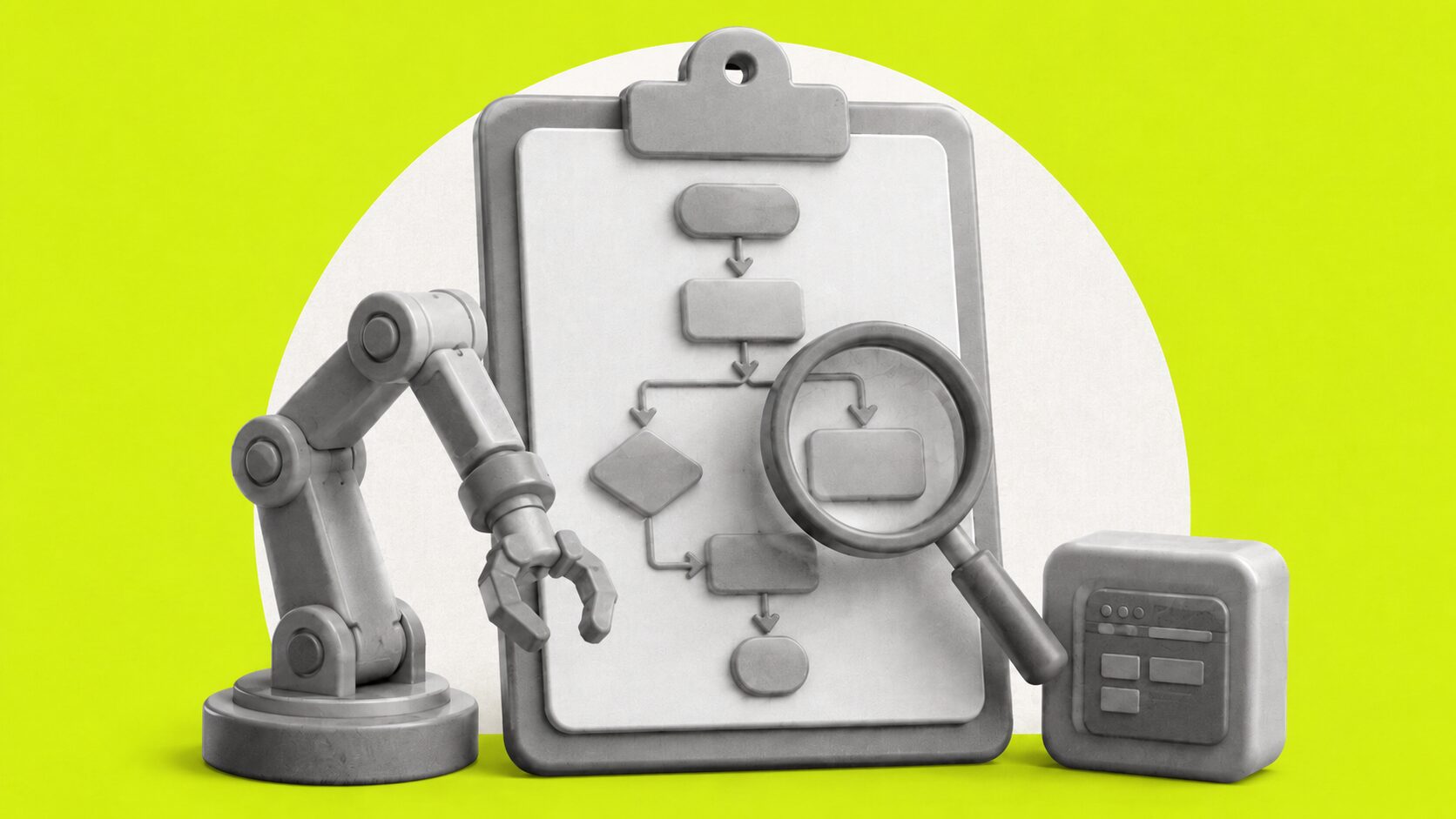
The third approach starts by choosing the right tool. Before making that choice, you look at the workflow itself—where the work starts, who touches it, where it waits, and how exceptions are handled. Only then do you decide what should be automated, what should stay with people, and how the two work together. Some organizations formalize this through a Smart Business Analysis (SBA), mapping how work moves before deciding what to automate. It takes more effort upfront, but it is often the approach still delivering results a year later.
Why is the tool rarely variable?
Underneath all three sit the same uncomfortable truth. Technology almost never decides the outcome; the process does. You can watch two companies buy the identical platform and end up in opposite places, one with a workflow it understands and automation that fits, the other with an expensive license sitting on top of the same backlog it had in March. Same capability, different results, and the only thing that moved was how well each understood its own work first.
This is also where the cost stops being abstract. A task worth thirty minutes to one person rounds to nothing until you trace it across the organization and find ten or fifteen people spending that same half hour, which is suddenly hours a day in plain sight. Handle it once at the level of the workflow rather than the individual, and that time returns. One regional health system that approached operations this way identified the equivalent of twenty-two full-time roles in recoverable time, not by cutting anyone but by lifting people off work that never needed them. It is also why a well-aimed automation can return its cost inside a year when the long-standing assumption has been two or three. The payoff is not a tool being cheap. It is pointing it out at work, whose real cost was invisible until someone added it up.
How to tell which problem you have
You can save real money by figuring out early whether you have a tool problem or a process problem, and a few honest questions get you most of the way. Can you describe the workflow from end to end without waving past a step? Do you know what happens when the input is unusual, not just when it is clean? If two people run the process, do they run it the same way? When you picture automating it, are you picturing a cleaner version of the work or a faster version of the current chaos? If those are hard to answer, the gap is in the process, and no tool will close it for you.
The encouraging part is that the strongest approaches no longer treat this as people versus machines. The better question is how to orchestrate the work, letting automation carry the repetitive load, keeping people on the judgment, and designing the handoffs, so the whole thing holds when conditions change. You now see this as a process question first and a technology question second, which already puts you ahead of most companies wrestling with the same decision. What remains is the question of timing, weighing another year always behind against the disruption of finally changing how the work gets done.
Your next step
This article comes down to one question: do you have a tool problem or a process problem? A smart business analysis is how you answer it without guessing. It is a two-week program that starts where this article is said to start, with how the work moves, not with a tool, and looks across your whole operation rather than a single process.
Here is what to expect, plainly. Over two weeks the team reviews how work moves through your organization, identifies the tasks quietly eating the most time, and calculates the return on investment for each opportunity so you can see real numbers, not promises. You leave with a ranked view of where to start and what it is worth, and you decide what happens next. Even if you choose to do nothing further, you walk away knowing exactly where your time and money are going, which is worth having on your own.
Two-week program Schedule a smart business analysis Get started