Why do the manual processes you keep meaning to fix never make it to the top of the list.
You already know the thing that needs fixing, and you have known for a while. It surfaces every busy season, costs you the same hours and the same headaches it cost last time, and every time you tell yourself that once things calm down you will deal with it for good. Things never quite calm down, so next season it returns exactly as it was. This is one of the most common traps in operations and one of the least discussed, because from the outside it looks like nothing is wrong. Everyone is busy, the work is getting done, and the same fires keep starting in the same places while no one ever reaches the cause.
Why the urgent wins
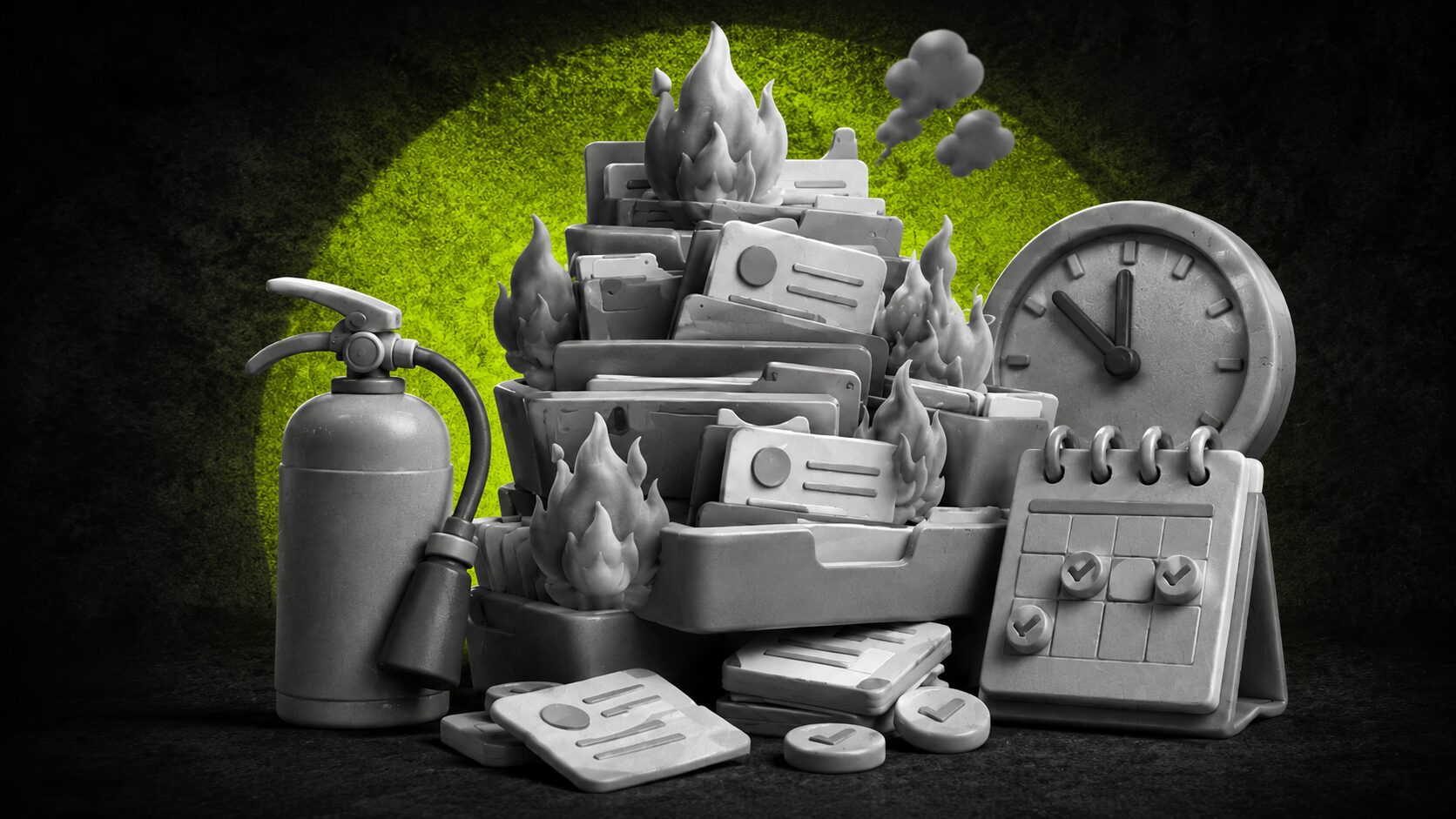
The problem is not discipline. It is that urgent and important are not the same thing, and urgent shouts louder. The fire in front of you must be handled today; the fix that would prevent the fire can always wait until tomorrow, because nothing breaks if you delay it one more day. So, the fix loses to whatever is burning today—not because it matters less, but because it has no deadline. In a week filled with deadlines, work without one rarely gets done. That is how problems everyone agrees with should be fixed to survive for years.
The story we tell ourselves
There is a quieter reason too, worth being honest about. Fixing the root cause feels big. People imagine it means stopping everything, mapping every process, a long project that pulls the team off work they cannot step away from, and set against that. Another day of firefighting feels like a safer bet. That picture is usually wrong, and the wrongness is what keeps people stuck, because the belief that the fix is huge and slow is exactly what stops anyone from starting. In practice, the opposite is closer to true. A small, well-chosen automation often takes days, not months, and the worry that it must be the biggest, highest-value project is itself part of the trap. The real wins tend to be the simple repetitive tasks nobody bothered to question.
What does the waiting actually cost?
Add it up and the firefighting is rarely cheaper than the fix; it is just spread out, so no one ever totals it. The same hours lost every month, the same overtime every busy season, the same good people worn down handling the same preventable mess, some of whom eventually leave, and the slow drift backward as competitors who did stop to fix things pull ahead. Worst of all is the opportunity that never happens, because every hour spent on a fire you could have prevented is an hour not spent on the work that would move the business. Stuck in reaction, you never reach the things that require thought, and that cost is real even though it never shows up on a report.
If you recognize your own year in this, firefighting is not a sign that you or your team are doing anything wrong. It is a sign of being caught in a pattern that is genuinely hard to break from the inside, because the one thing that would free up time is the thing there is never time for. Seeing the trap clearly and seeing that the way out is smaller than you feared, is what makes it possible to step out of it.
Keep reading Getting Automation Done: Build It Yourself, Hand It to IT, or Bring in Help? Read next