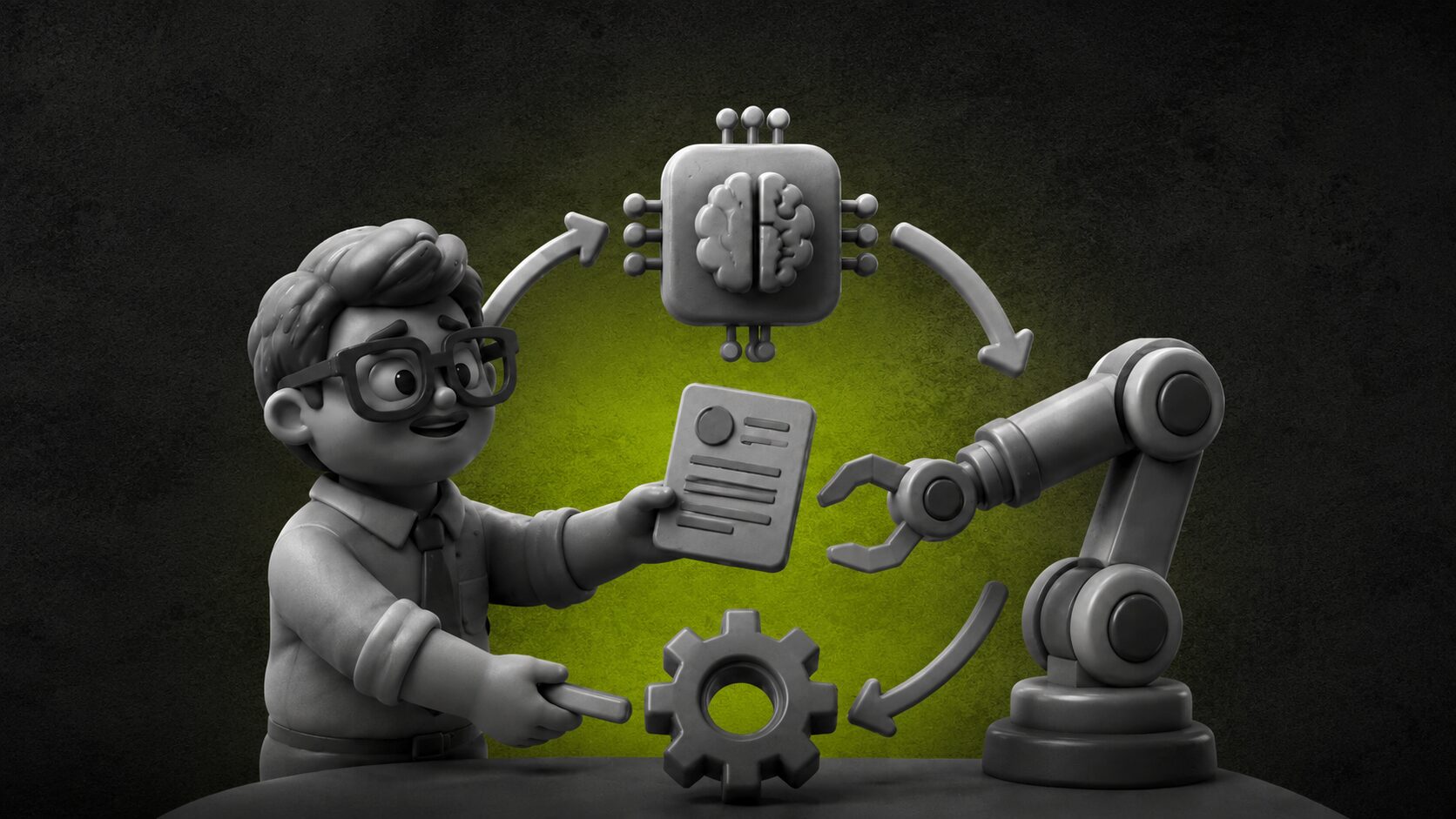
Why is the future of operations not AI replacing people; it is all three orchestrated.
You have already let go of the idea that adding people is the answer; the backlog taught you that. So, the question becomes the harder one. If not more hires, then what? Ask it out loud in most companies, and the room splits into camps almost immediately, and it is worth walking through where each one leads before you commit, because two of them are dead ends dressed up as solutions.
The two answers everyone reaches for first
The first answer keeps working with people and tries to make them faster. Tighten the process, add a checklist, buy a productivity tool, and ask everyone to push a little harder. There is nothing wrong with it, and it carries no real risk, which is also why it changes little. The work is still manual, the volume still grows, and effort has a ceiling that arrives sooner than anyone expects. You end up roughly where you started, just more tired.
The second answer swings to the opposite extreme: hand the work to the machines, let AI and bots take it over, and pull people out entirely. On a spreadsheet this looks cheapest, and in practice it meets the same wall every time. Automation handles the routine case well and the unusual case badly, and real work is full of unusual cases. Strip the people out, and you strip out the judgment that decides what to do when the input does not match the script, and you usually lose hard-won knowledge along with the labor. You pay for that the first time something does not go to plan.
The option most companies skip
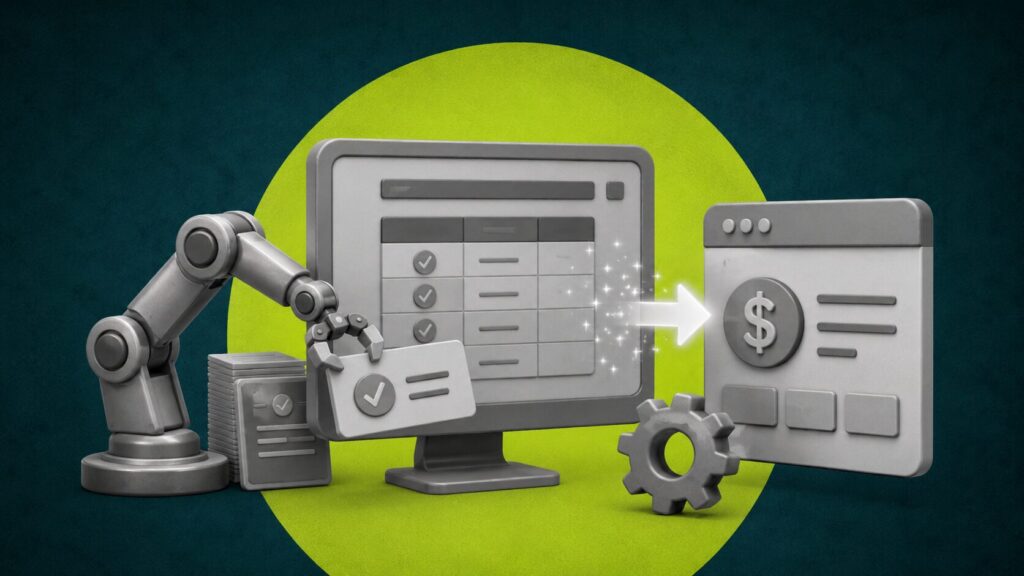
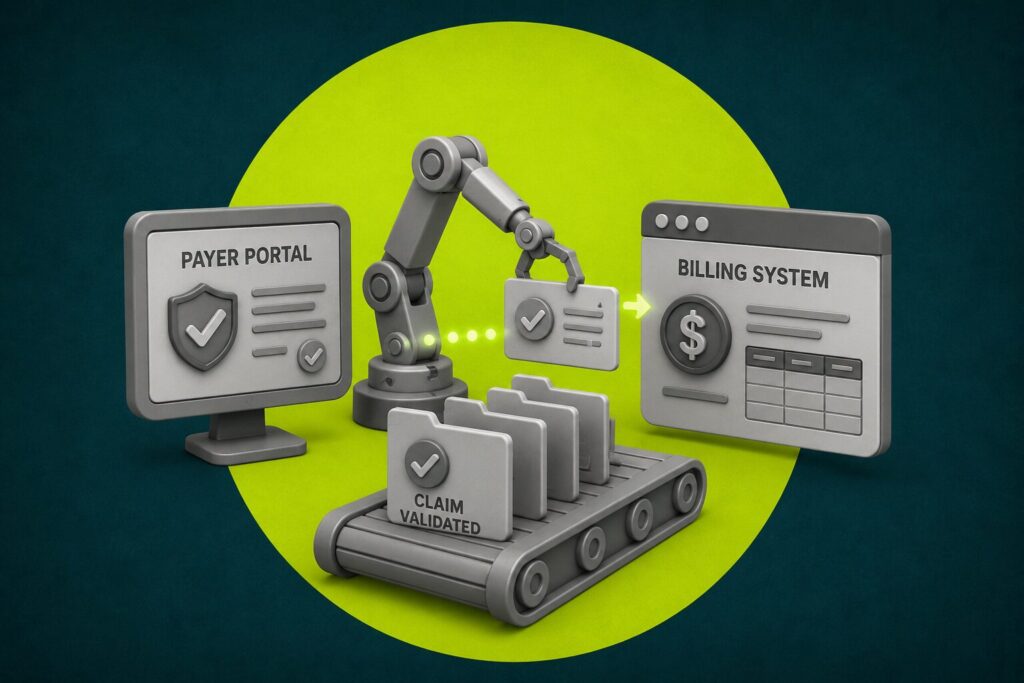
There is a third path, and it tends to get lost between the two louder ones. Rather than choosing between people and machines, you put all three to work on the parts each does best. Bots take the repetitive, rule-bound steps that never needed a human. AI handles pattern work and passes first. People stay on the exceptions, relationships, and the calls that genuinely require judgment. The useful frame is that automation is a tailwind, not a replacement; it is not there to push people out in front of the work but to carry the load that was wearing them down.
This is not a theory. One health system that approached operations this way freed up the equivalent of twenty-two full-time roles, not by cutting staff but by lifting people off repetitive tasks and onto work only people can do. The thirty minutes a day that used to vanish across a dozen desks became time the business could finally spend where it mattered, and because the value was measured rather than assumed, the return showed up inside a year instead of the two or three that buying a tool outright usually takes.
How to tell orchestration from a tool in costume
Much of what gets sold as this third path is really the second one in friendlier language, so a few questions separate the real thing from the rest. Does the approach start with your workflow or with a product? Does it plan for exceptions and for the day the process changes, or assume everything stays tidy? Does it keep people in the loop where judgment belongs, or quietly aims to remove them? When it is finished, will you understand and own what was built, or depend on someone else to keep it alive? The red flags are the mirror image: anyone who promises to automate everything, quotes a price before understanding your work, or treats your people as the cost to remove rather than the capability to free.
What you have now is a cleaner way to frame the decision, because this was never AI versus people. It is a question of how to orchestrate AI, bots, and the team you already have, so the work moves without burning anyone out and seeing it that way puts you ahead of the companies still arguing about which tool to buy. What is left is timing, weighing another year of hiring and burnout against the disruption of changing how the work gets done.
Your next step
The hard part of orchestrating AI, agents and people are knowing which work belongs to each, and that is exactly what a smart business analysis maps out. Over two weeks it looks across your operation, not at one process, and identifies where automation should carry the load, where people should stay in the loop, and where the return would be greatest.
Here is what to expect, the next two weeks the team reviews how work moves through your organization, identifies the tasks dominating the most time, and calculates the return on investment for each opportunity so you can see real numbers, not promises. You leave with a ranked view of where to start and what it is worth, and you decide what happens next.