The real trade-offs of each path, including the six-month build that never shipped.
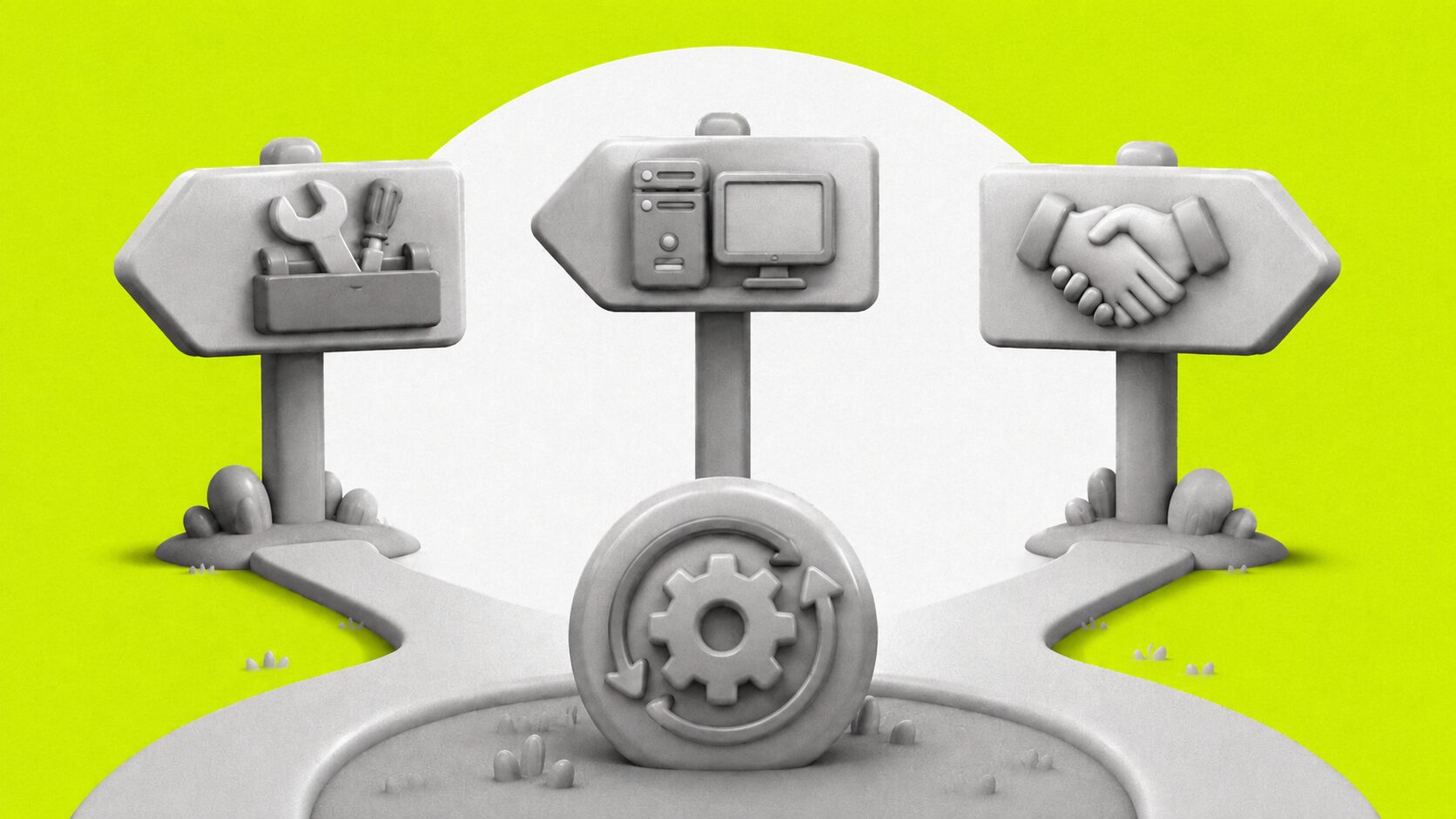
Once you accept that the fire will not be put out, the question turns practical: who does the work of fixing it? This is where many efforts stall, not because the answer is hard but because the choice feels weighty, so it gets deferred, which drops you right back into the firefighting you were trying to escape. There are really three ways to get it done, each right in some situations and wrong in others, and knowing which is which saves you the most expensive mistake of all, choosing the wrong path and concluding that automation itself does not work.
Build it yourself
The first path is to have your own people build it. The appeal is obvious: they know the work you do so it helps keep the control, there is no outside invoice, and for a small, well-understood task with someone who has the time and skill this can be exactly right. Your people already have full-time jobs, so the building competes with everything else and tends to be lost to the same urgent fires that started all this. There is a knowledge trap, too. One company spent six months having its team build a custom integration that still did not work when they finally stopped, the time and money gone and the original problem untouched. Building yourself works when the task is contained, and someone genuinely owns it; it goes badly when it quietly becomes a second job nobody has room for.
Hand it to IT
The second path gives it to internal IT. They have technical skills and they understand your systems, so for work that is mostly systems integration this can be a strong fit. The friction is that IT carries its own backlog and its own priorities, and your process of improvement joins a queue behind everything else considered critical. There can also be a translation gap, because IT knows the systems but not always the daily texture of the work being automated, and automation built without that ground-level understanding tends to miss the exceptions that matter most. This path works when IT has genuine capacity and a close partnership with the people who do the work; it stalls when your fix is item forty on a list of forty.
Bring in help
The third path brings in a partner who does this for a living. The advantage is focus and speed: it is their whole job; they have done it many times, and they are not competing against your internal people’s attention, so things move. The trade-off is cost and the need to choose well, because the field is crowded with large companies who are expensive and call themselves automation experts without much experience. The questions that sort them out are simple. Do they start by understanding your workflow or how do they assess? Will you understand and own what they build or depend on them forever? Can they point to real, measured results rather than promises? The right partner educates you as they develop, so you finish more capable, not more dependent.
How to choose
A few honest answers point you to the right path: whether your people or IT have genuine comprehension rather than theoretical capacity, how fast you need this to help maximize daily tasks, and how beneficial it is to have someone who has the knowledge to guide the first step. The most important move is the smallest one. Start with a single simple win rather than the biggest, most ambitious process, because a quick win that delivers in days proves the idea, builds belief across the organization, and frees a little time you can reinvest in the next one. That is how momentum begins. Which path fits depends on seeing your opportunities and your real capacity clearly, and that is a look worth taking deliberately rather than defaulting to your current path.
Your next step
Choosing between building it yourself, handing it to IT, or bringing in help only gets easier once you can see your opportunities and your real capacity, and that is what a smart business analysis gives you. Over two weeks it looks across your operation, ranks where automation would return the most, and turns the path of question from a guess into a decision.
Here is what to expect, over two weeks the team reviews how work moves through your organization, identifies the tasks that are the most time-consuming, and calculates the return on investment for each opportunity so you can see real numbers, not promises. You leave with a ranked view of where to start and what it is worth, and you decide what happens next.